The short version
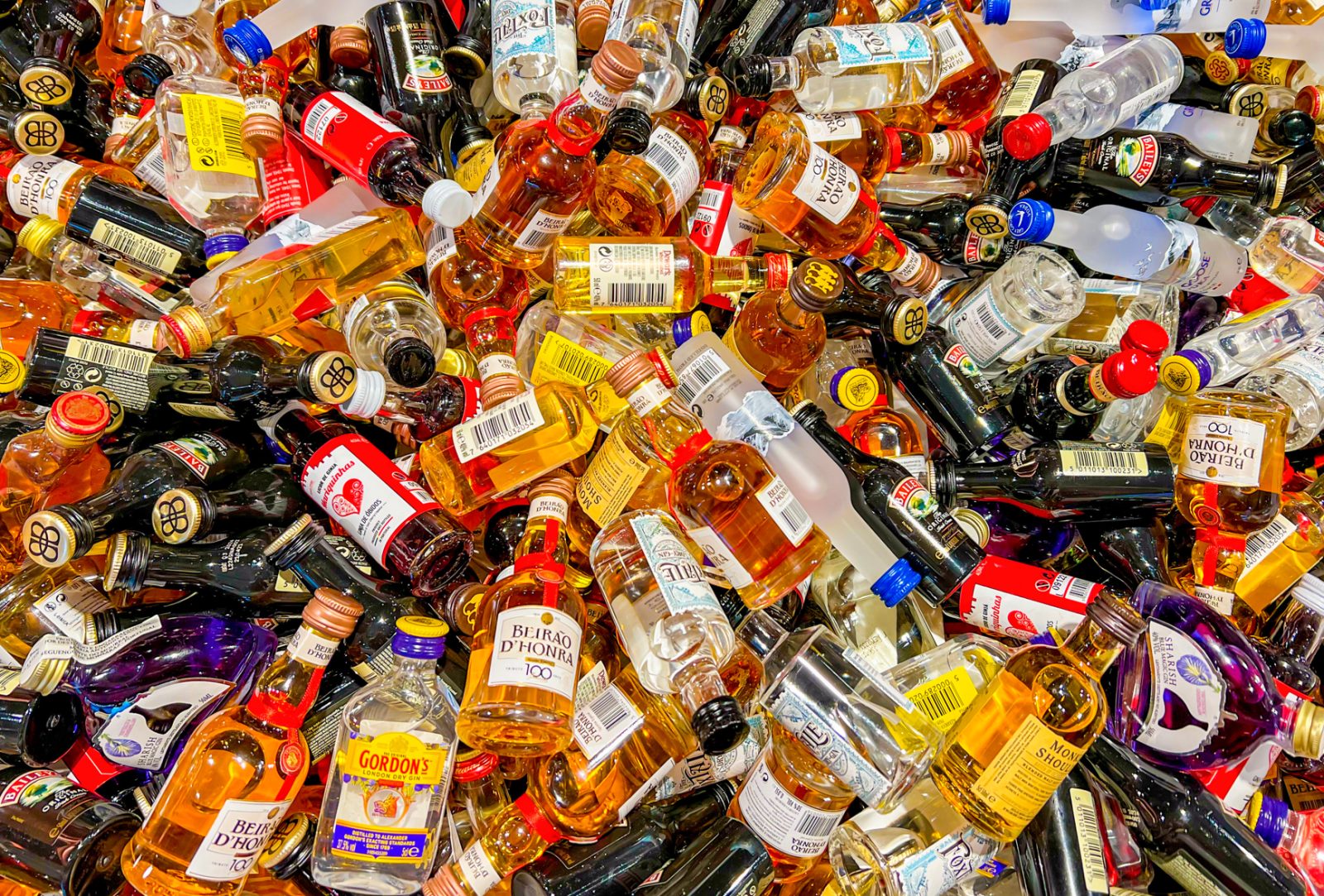
- The vote: On Wednesday, Nov. 18, the Madison County Board votes on an ordinance that would ban the sale of liquor bottles smaller than 6 ounces. That covers the 50 ml "shooters," "nips" or "airplane bottles," and the slightly larger 100 ml and 200 ml sizes. The county's Public Safety Committee approved it unanimously earlier this month.
- Who it covers: Only licensed sellers in unincorporated Madison County, mainly convenience stores and package-liquor shops. Grocery stores are exempt, and so is everything inside city and village limits. Board members are now asking towns to pass their own versions.
- What other places found: Places that banned the bottles saw far fewer of them on the ground, sometimes within months. Whether bans do anything more than that, such as reducing drinking and driving, is less clear. And the fairness argument from small retailers is a real one.
This one started as a Facebook argument before it reached most newspapers. One side posts photos of ditches full of tiny empty bottles. The other side asks why the corner gas station should pay for what a litterbug did. Both sides have a point, so this is a good one to lay out plainly.
What people are saying
The case for the ban. County Board Chairman Chris Slusser, who also serves as the county's liquor commissioner, has described the problem in ditch-level terms. He says anyone picking up roadside trash finds the little bottles everywhere, as many as 100 in a half-mile stretch. His assumption is that people buy them, drink them while driving, and throw them out the window. That second concern, drinking in vehicles, is part of why supporters want the ban and not just more cleanup.
The cleanup volunteer. The most visible advocate is Rusty Wheat of Roxana. Wheat runs a one-man roadside cleanup he calls the "Chain Gang," chartered under Illinois' Adopt-A-Highway program. He picks up trash weekly along Route 143 in Wood River and Roxana and near the I-255 exits. He's personal about it: his brother was killed by a drunk driver on Route 143. He has spent years at county and municipal meetings pushing officials to do more about litter, including litter from trash trucks, and he has worked with Slusser and other board members on cleanup days. At the Godfrey Village Board on Nov. 4, he held up a handful of 1-ounce bottles to make the case.
Spreading to towns. Because the county ordinance stops at city limits, board members are lobbying councils directly. District 12 board member Don McMaster has taken the request to the Wood River City Council.
The case against. The strongest objection in local social media posts goes like this: the ban punishes small retailers who follow the rules, and does nothing to the people who throw bottles out of car windows. Under that view, the county already has laws against littering and open containers and should enforce them. Critics also note that the ban exempts grocery stores and every incorporated town, so anyone who wants a shooter can drive a few minutes and buy one. The worry is that the result is lost sales for a handful of rural stores, with the same bottles still ending up in the ditches.
Both arguments can be true at once. We'll come back to that.
What we know
| Claim | Status |
|---|---|
| The Public Safety Committee unanimously approved the ordinance in early November | Confirmed (per The Telegraph) |
| The full board votes Wed., Nov. 18, at 5 p.m., in the Administration Building in Edwardsville | Confirmed (per The Telegraph; check the county's agenda the day of) |
| The ban covers bottles under 6 oz, at off-premises licensees in unincorporated areas only | Confirmed (per The Telegraph) |
| Grocery stores are exempt | Confirmed (per The Telegraph) |
| It would take effect immediately if passed | Confirmed (per The Telegraph) |
| The ban would apply inside Alton, Edwardsville, Granite City, Collinsville or any other town | False. Towns set their own liquor rules. |
| Final ordinance text is publicly posted | Not yet. We couldn't find it on the county site as of Tuesday. |
The county already has related laws. Madison County's code already bars drinking on public streets and sidewalks in unincorporated areas. It also bars carrying alcohol in a vehicle unless it's in the original package with the seal unbroken. An opened shooter in a cup holder is already a violation. The hard part is catching it.
Why these bottles specifically. A 50 ml shooter is a single drink in a small, cheap, easy-to-hide bottle, and it's empty in one swallow. It's also nearly impossible to recycle. Most of the bottles are under 2 inches across, which is too small for recycling sorting machines, so even the ones that get thrown away properly end up in the trash. Volunteer cleanups in New England have reported nips making up more than 30% of what they collect.
What happened in other places
This isn't new. Several Illinois towns and dozens of other communities have tried it, each for different reasons:
- Chicago has long banned the sale of 50 ml and 100 ml bottles inside city limits, while the surrounding suburbs sell them.
- Joliet voted 7–0 in 2012 to ban single-serve mini bottles and some single-serve beer. Police there pushed it as a way to reduce panhandling and public drinking downtown, not litter.
- Lockport (Will County) passed an ordinance in 2024 barring package-liquor stores from selling bottles of 3 ounces or less. The stated reason was empties left in store parking lots, which is close to Madison County's.
- Kansas City, Mo., in a 7–6 council vote, banned bottles of 200 ml or less (at 35% alcohol or higher) in five parts of the city. Its critics made the same argument we're hearing here: the ban skipped grocery stores and the rest of the city.
- Chelsea, Mass. banned bottles under 100 ml starting June 1, 2018. This is the most-studied example. City officials called it close to an overnight success on litter. They also reported that alcohol-related emergency calls fell nearly 75% within about two years, and that no liquor stores closed. Some observers say other changes in the city at the same time deserve part of the credit, so the cause of the drop in emergency calls is disputed. Store owners appealed the ban to the state, and lost.
- Falmouth, Mass. ran litter audits before and after its ban. Nips went from the single most common item, about 32% of litter, to about 6% within a year.
- Plymouth, Mass. went the other way. Town meeting passed a ban, and then voters repealed it in a January 2024 special election, 3,682 to 3,517.
Is there an alternative? Yes. Connecticut chose a small per-bottle surcharge on nips over bans, with the money sent back to towns for litter programs. That state's package-store association opposed local bans. It said that after Chelsea's ban, stores there sold more larger bottles. Joplin, Mo. has heard a proposal for either a ban or a $1 tax on small bottles to pay for cleanup.
What we don't know yet
- How many stores this touches. We don't know how many Class A or B off-premises licenses exist in unincorporated Madison County, or what share of their sales are shooters. It may be a small number of stores and a meaningful share of their business, or neither.
- Whether litter actually drops here. The New England results came from bans that covered a whole city. A ban that covers only unincorporated land, with towns and grocery stores still selling, has more holes. If people keep buying shooters a few miles away and drinking them on the same roads, the ditches may not change much. No evidence yet either way, because a partial ban like this one hasn't been studied that we could find.
- Whether towns follow. The ban gets more effective with each city that adopts it. Wood River and Godfrey have heard the pitch. We haven't seen a city vote yet.
- Effect on drinking and driving. This is the biggest claim supporters make, and the hardest to prove. Chelsea's numbers are encouraging, but its ban covered a whole city of 40,000 people and it can't be cleanly separated from other changes. Nobody should promise that this ban will reduce DUIs.
- Exact ordinance wording. For example, whether "under 6 oz" is measured in fluid ounces or milliliters, and whether it covers canned cocktails or only spirits. We'll update when the text is out.
Why it matters here
If you live in a town, this probably won't change where you shop on Thursday. It matters for three other reasons.
First, the road you drive on probably runs through unincorporated land, and that is where much of the visible litter is. Second, this is a county board using its liquor-licensing power, which is one of the few tools a county has, to try to solve a litter problem it can't otherwise reach. Third, if the ban passes, your city council will likely be asked to match it. When that happens, the useful questions are the ones above: Will it be enforced? Does it cover grocery stores? And what happens to the small business owner down the street?
The ban's supporters and opponents aren't arguing about whether shooter bottles are a mess. Everyone agrees on that. They're arguing about who should pay for fixing it: the store that sells the bottle, or the person who throws it out.
What to watch
- Wed., Nov. 18, 5 p.m.: The Madison County Board votes, at the Administration Building, 157 N. Main St., Edwardsville. Public comment is usually taken at the start.
- Wood River and Godfrey: whether either one puts its own ordinance on an agenda.
- The ordinance text: in particular the size cutoff, the grocery-store exemption, and penalties for licensees.
- Spring cleanup season: If the ban passes, volunteers like Wheat will be the first to know whether the ditches look different. A before-and-after count would be the best local evidence anyone could collect.
Sources
- The Telegraph (Scott Cousins), on the committee vote and the Nov. 18 board vote, Nov. 16, 2026: https://www.thetelegraph.com/news/article/madison-county-mini-liquor-ban-illinois-metro-east-22533955.php
- The Telegraph, on the Wood River City Council request, Nov. 6, 2026: https://www.thetelegraph.com/news/article/wood-river-bottle-ban-22515280.php
- Madison County Code § 70.040 (public consumption; open containers in vehicles): https://codelibrary.amlegal.com/codes/madisonco/latest/madisoncou_il/0-0-0-2703
- Madison County License Investigation office: https://www.madisoncountyil.gov/departments/planning_and_development/license.php
- RiverBender, "Rusty Wheat's 'Chain Gang' Reflects on Trash Cleanup in Madison County": https://www.riverbender.com/news/details/rusty-wheats-chain-gang-reflects-on-trash-cleanup-in-madison-county-85187.cfm
- RiverBender, letter to the editor from Rusty Wheat on the "Chain Gang" name, Nov. 2024: https://www.riverbender.com/news/details/letter-to-the-editor-meaning-of-rusty-wheats-chain-gang-77253.cfm
- Patch, Joliet's 2012 ban: https://patch.com/illinois/joliet/single-serve-liquor-banned-to-stop-panhandlers
- City of Lockport, agenda memo on Ordinance 24-025: https://d2kbkoa27fdvtw.cloudfront.net/lockport/14bb4860aaece7aee71be148ade546be0.pdf
- Kansas City Star via AOL, the Kansas City ban: https://www.aol.com/news/kc-bans-mini-liquor-bottles-214924678.html
- Boston Globe editorial on Chelsea's results, May 2023: https://www.bostonglobe.com/2023/05/30/opinion/boston-litter-alcohol-nips-bottles/
- CommonWealth Beacon, "'Nip' ban having an impact in Chelsea": https://commonwealthbeacon.org/health/nip-ban-having-an-impact-in-chelsea/
- Massachusetts ABCC decision on the Chelsea licensees' appeal: https://www.mass.gov/doc/chelsea-9-licensees-appeal-no-nips-5-26-2020/download
- Plymouth Independent, Falmouth audit figures: https://www.plymouthindependent.org/nip-bans-have-been-proven-to-reduce-litter/
- Surfrider Massachusetts, Plymouth repeal vote: https://massachusetts.surfrider.org/campaigns/Ban+Miniature+Liquor+Bottles+(Nips)+in+Plymouth,+MA
- Connecticut Package Stores Association testimony against municipal nip bans, 2024: https://cga.ct.gov/2024/envdata/TMY/2024HB-05215-R010228-Hughes,%20Sean,%20Assistant%20Director-CT%20Package%20Stores%20Assoc.%20-CPSA--Opposes-TMY.PDF
- Conservation Law Foundation testimony to the Rhode Island House on recyclability: https://www.rilegislature.gov/Special/comdoc/House%20Environment%20and%20Natural%20Resources/1-27-2022--H7064--Conservation%20Law%20Foundation.pdf
- Joplin Globe via Yahoo, Joplin tax-or-ban proposal: https://news.yahoo.com/businessman-calls-city-tax-ban-035900397.html