
-
The short version
- The state's annual school report card came out Oct. 30. It covers the 2025–26 school year for every public school and district in Illinois, and you can look up any of them free at IllinoisReportCard.com.
- Statewide, the news was mostly good. Illinois set a record 89.8% four-year graduation rate, proficiency rose in reading, math and science, and chronic absenteeism fell for a fourth straight year. Math is still the weak spot.
- Ratings work differently this year. A new system called Profiles of Performance replaced the old one, so a school's rating this year can't be compared directly with last year's.
Every fall, the report card comes out and districts announce their best numbers. The data underneath gets far less attention, even though it's free, detailed and covers every public school we have. This year it's also harder to read, because the ratings changed. Here's a plain-language guide to what you're looking at, and what stands out for the Metro East.
How to look up your school
- Go to IllinoisReportCard.com.
- Type your school or district name in the search box. Spell out "Community Unit," or search a short name like "Granite City."
- Start with the Snapshot page for the big numbers.
- Click Academic Progress for test results and Students for attendance.
- Use Compare Schools to see your school next to similar ones, which is fairer than comparing it with the state as a whole.
- Want something to save or print? Look for the At-a-Glance PDF.
What the numbers mean
Proficiency is the share of students who met grade-level expectations on the state test. It's a snapshot: where students are right now.
Growth measures how much students improved compared with similar students across the state. A school whose students start far behind can still show strong growth. That's often the better sign that teaching is working.
Chronic absenteeism is the share of students who missed 10% or more of the school year, excused or not. That's about 18 days. It's one of the strongest early warning signs for falling behind.
Ninth-grade on track is the share of freshmen who earn enough credits and don't fail more than one core course. Students who finish freshman year on track are far more likely to graduate.
Graduation rate is the share of students who finish high school in four years.
The new ratings. Under Profiles of Performance, each school gets one of five main designations: Exemplary, Approaching Exemplary, Commendable, Developing, or Comprehensive. The last is for schools that need the most support. The ratings are built mostly on proficiency, growth and graduation, and a school can move up for strong attendance, English learner progress or school climate surveys. Schools are measured against set standards, not ranked against each other. That's why far more schools earned Exemplary this year: about 28%, compared with roughly 10% under the old system, which reserved Exemplary for the top tenth.
What about private schools? The report card covers public schools only. Private and parochial schools, including our Catholic and Christian schools, aren't required to take the state tests, so they don't appear. Ask those schools directly for their own results, such as ACT or SAT averages and graduation and college placement rates.
Statewide: what we know
- Graduation rate: a record 89.8%, the third straight record and above the state's federal goal of 88.9% four years early.
- Reading/English: 55.4% proficient, up from 52.4%.
- Math: 39.2% proficient, up from 38.4%. Math growth is still below pre-pandemic levels for most student groups, and the state just released its first numeracy plan to address it.
- Science: 48.7% proficient, up from 44.6%.
- Chronic absenteeism: down to 23.5% from 29.8% in 2022, a fourth straight year of improvement. Even so, nearly one student in four still misses about three and a half weeks of school a year.
"We're seeing more students meeting grade-level expectations, graduating from high school on time," said State Superintendent Tony Sanders.
How Metro East districts did
These are highlights, not rankings. Districts serve very different communities, and a fair look starts with your own school's full report, especially its growth and student-group data.
Edwardsville CUSD 7. Twelve of 13 schools earned Exemplary, and Lincoln Middle School earned Approaching Exemplary, so every school in the district is in the top two levels.
- English proficiency: 67.9%, up from 59.2% (state: 55.4%).
- Math: 53.1%, up from 51.1% (state: 39.2%).
- Science: 64.2%, up from 61.0% (state: 48.7%).
- Graduation rate: 95.8%, up from 92.9%.
- Freshmen on track: 96%.
- Students attending at least 90% of school days: 85.4%, compared with 76.5% statewide.
Superintendent Dr. Allen Duncan called the results "a remarkable accomplishment" and said the goal remains for "every student [to] perform at or above grade level."
O'Fallon Township High School (District 203). OTHS earned Exemplary for 2025–26, placing it in the state's top-performing group of high schools.
- Class of 2026 graduation rate: 96.2%, the school's highest since 2008.
- Juniors meeting state standards on the ACT: 65% in English, 54.8% in math and 62.5% in science.
- English learners ranked in the top 3% statewide for academic growth.
Collinsville CUSD 10. Two schools earned Exemplary: Maryville and Webster elementaries. Caseyville and Kreitner elementaries earned Approaching Exemplary. Collinsville High School, Dorris Intermediate, Renfro, Summit and Twin Echo earned Commendable. Collinsville Middle School received Comprehensive, the level for schools that get the most state support.
- Graduation rate: 87.8%, up 4.2 points, with gains of 6 points for White students, 8 for Black students and 2 for students with disabilities.
- Freshmen on track: 89.2%, up from 88%.
- Students attending at least 90% of school days: 77.7%, just above the state's 76.5%.
- Several elementary schools posted big growth jumps. Summit's reading growth rose 16.6 points, and Twin Echo's math growth rose 11.7.
"Our students are moving in the right direction," said Superintendent Dr. Mark Skertich, adding that "we must continue to raise the bar, challenge our students, and strengthen our instruction."
Granite City CUSD 9. Granite City's numbers show how far the district still has to go.
- Proficiency: 29.5% in English, 13.5% in math and 27.7% in science. The state figures are 55.4%, 39.2% and 48.7%.
- Growth: students grew a bit less than similar students statewide. Growth scores ran from 40 to 47, where 50 is typical.
- Graduation rate: 83.2%.
- Freshmen on track: 82.6%, against 89.6% statewide.
- Chronic absenteeism: 39.5%, about two in five students. Only 60.5% of students attended consistently, against 76.5% statewide.
- Designations: of the district's schools that received a rating, one was Commendable and four were Comprehensive, the level for schools that get the most state support.
The context matters. About two-thirds of Granite City's 5,459 students (65.9%) come from low-income households. Yet the district spends less per student than the state average: $17,337 in operating costs against $20,978 statewide, and $10,634 on instruction against $12,239. Under Illinois' own school-funding formula, Granite City has 75.1% of what the state calculates it needs to educate its students adequately. Local property taxes cover only 37.7% of its revenue, compared with 57.8% statewide, so state funding matters more here than in most places. The district received $694,915 in state school improvement funds across seven schools.
Alton CUSD 11, Belleville District 201 (East and West), Belleville District 118 and O'Fallon District 90. These districts hadn't published 2026 summaries as of this writing. You can look up any of their schools in a few clicks at IllinoisReportCard.com.
What we don't know yet
How much of the jump in Exemplary schools is real improvement. Proficiency did rise, but the new rating system also sets different bars. ISBE says this year's designations shouldn't be compared directly with past years.
Whether math will catch up. Math is the slowest subject to recover statewide and in most local districts, including high performers. The new state numeracy plan is just starting.
Why it matters here
For parents: the report card is the one place to see the same measures for every public school, side by side. If your child's school has low proficiency but strong growth, that's real progress. If attendance is slipping, that's worth a conversation now.
For taxpayers: school spending is the largest part of most Metro East property tax bills. The report card shows what each district spends per student and how close it is to "adequate" funding under the state's formula.
For the region: the gap between our strongest and most-challenged districts is wide, and it tracks closely with income. Strong districts and struggling ones sit a few miles apart, often in the same county. That's worth understanding before anyone rushes to conclusions about any one of them.
What to watch
- School board meetings this month and next: most districts present their report card data publicly. It's a good time to ask questions.
- Spring 2027: state testing for 2026–27.
- Next fall: the second year of Profiles of Performance, the first real year-over-year comparison under the new system.
Sources
- Illinois State Board of Education, "Illinois Sets New Record for Highest-Ever Graduation Rate" (Oct. 30, 2026): https://www.isbe.net/Lists/News/DispForm.aspx?ID=1606
- Illinois Report Card: https://www.illinoisreportcard.com
- ISBE, 2026 Report Card Glossary of Terms: https://www.isbe.net/Documents/2026-RC-Glossary.pdf
- Daily Herald, on statewide highlights (Oct. 30, 2026): https://www.dailyherald.com/20261030/education/higher-science-proficiency-graduation-rates-among-highlights-of-2026-illinois-report-card/
- KWQC, on the graduation rate and ESSA target: https://www.kwqc.com/2026/10/30/illinois-report-card-shows-record-graduation-rate/
- EdGlenToday / RiverBender, "12 District 7 Schools Recognized as Exemplary" (Oct. 30, 2026): https://www.edglentoday.com/articles/details/12-district-7-schools-recognized-as-exemplary-on-illinois-school-report-card-97937.cfm
- O'Fallon Township High School, "OTHS Earns Exemplary Status" (Oct. 30, 2026): https://www.oths.us/view-all-news/~board/ofallon-township-high-school-district-203-news/post/december-guest-speaker-series-12224
- Collinsville CUSD 10, "2026 Illinois Report Card Highlights School Performance Across Collinsville CUSD 10": https://www.kahoks.org/index.php?pageID=smartSiteFeed&psqFeed=true&articleID=94545639
- ISBE, "An Overview of Profiles of Performance" (October 2026): https://www.isbe.net/Documents/2026-An-Overview-of-Profiles-of-Performance.pdf
- Granite City CUSD 9, 2025–26 Illinois District Report Card (PDF): https://resources.finalsite.net/images/v1793387886/gcsd9net/vogxattmpbxthuaoe55m/2026GCSD9.pdf
How to Read Your School's 2026 Illinois Report Card, and How Metro East Districts Did

From IL Sider
0 Comments
Log in to comment. Comments are available to supporters.
Read next

What Thanksgiving Dinner Costs This Year, and Why
The Farm Bureau's survey is out: dinner for 10 costs $58.63, up 6% and the first increase since 2022. Turkey costs more, eggs cost less, and your grocery store may be selling you the bird below cost.
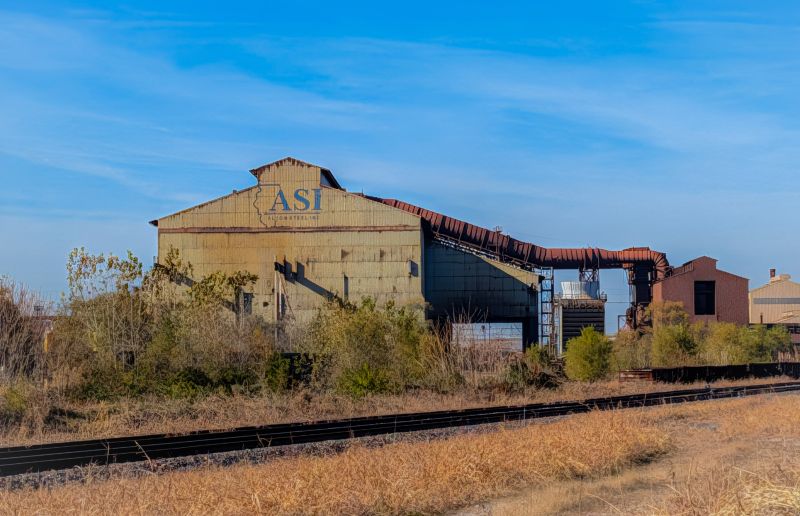
A data center at the old Alton Steel mill? Here's where it stands.
A Nevada developer wants to turn Alton's idle 381-acre steel mill into a data center campus. Nothing has been filed with the city yet. Residents are pushing back, a moratorium is up for a vote Monday, and Granite City-area voters have already said what they think of data centers.
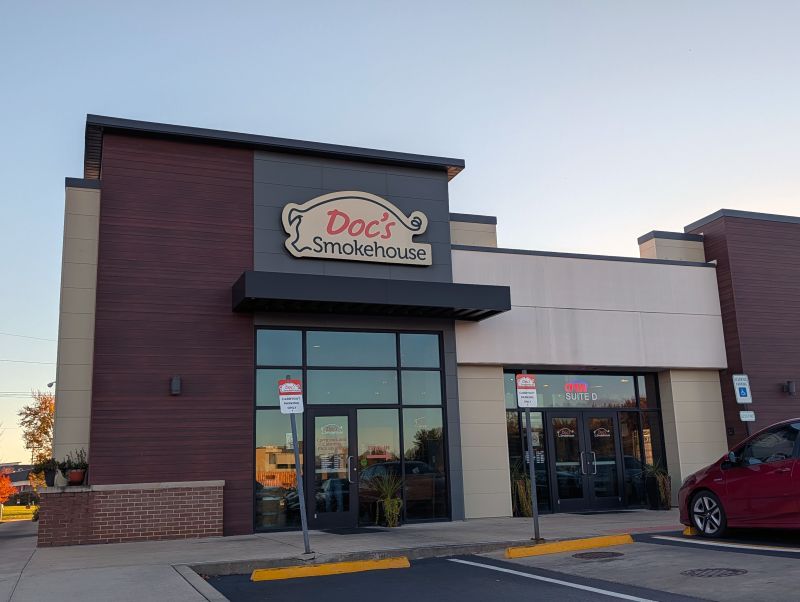
Edwardsville's Doc's Smokehouse Is Again Among the Best Barbecue in America
A national barbecue magazine has named Doc's one of 28 "Best of the Best" barbecue restaurants in the country. It's still the only one in the St. Louis area.
From IL Sider