The short version
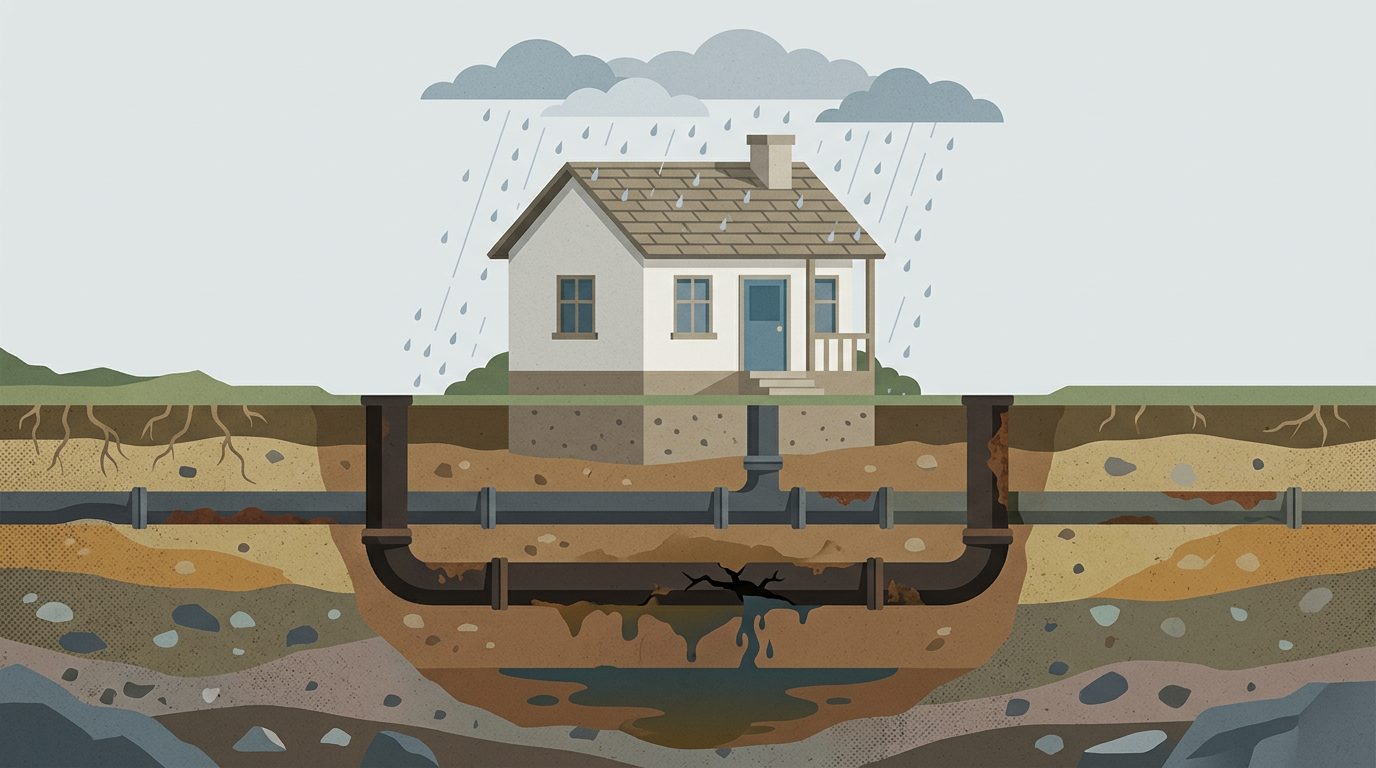
- For years, raw sewage has backed up into homes, yards and streets in Cahokia Heights, the St. Clair County city formed in 2021 from Cahokia, Alorton and Centreville. A federal court order signed in January now requires the city to fix its sewer system, but the full repair could take about two decades.
- In August, the state cited both of the city's water providers after its own testing found too little disinfectant in tap water at some homes. A community testing program had earlier found E. coli in some samples. The state's tests did not find E. coli.
- This month, Illinois EPA Director James Jennings met residents in East St. Louis, acknowledged the agency has fallen short, and promised quarterly meetings. Residents and their lawyers say they're glad to be heard, and now they want results.
Why this is here
This is one of the most important environmental stories in the Metro East, and it rarely gets past local reporting. The people living it are 20 minutes from most of us. And with a court order, a state citation, a federal lawsuit and an agency apology all in play, it's hard to keep straight what's actually required and what's still only promised.
What people are saying
Residents say they've waited long enough. Yvette Lyles told the Illinois EPA that her home has flooded with sewage for nearly the whole time she's lived there. She asked what officials would do for residents who feel unrepresented. Some residents say they no longer drink the tap water. Michael Hayes, 80, wrote to the court earlier this year: "I feel like the city is waiting for us to die before they do anything."
Their lawyers credit the state for listening, but not yet for fixing. "The agency has done a good job at listening to the community, but we still need to see the outcome," said Kalila Jackson, senior staff attorney at Equity Legal Services. She said the long repair plan has "too many exit ramps," and that older residents are "fighting this hard for something they may never see."
The Illinois EPA says it owes residents more than it has given. "I trust everybody in this room far more than you should trust me," Director Jennings told the crowd. "You all do not owe us anything." He called the slow pace an injustice to people who have lived with backups for decades. He said delays come from financing and permitting across several levels of government, and that federal cuts to infrastructure grants have made funding harder.
The city says its own testing shows the water meets standards. Mayor Curtis McCall Sr. has suggested some residents' problems may come from aging water lines inside their homes. Residents' lawyers dispute that.
What we know
There's a binding federal court order. Confirmed. In December 2024, the U.S. EPA, the Justice Department and Illinois announced a settlement with Cahokia Heights over illegal sewage discharges. The complaint alleged more than 300 discharges since November 2019, into waterways and also into ditches, roads, yards and homes. A federal judge entered the order, called a consent decree, on Jan. 20, 2026.
What it requires. Confirmed. The city must pay a $30,000 penalty and carry out an estimated $30 million in sewer work. That includes about 80 projects. The largest is a new interceptor sewer, estimated at $13.5 million, that would separate Cahokia Heights' system from East St. Louis'. The work happens in two phases:
- Phase 1: clean the whole system, find the causes of overflows during rain, assess the condition of the sewers, and repair or replace bad lines and manholes.
- Phase 2: investigate the parts of the system Phase 1 didn't reach, and plan more repairs.
The city also has to report overflows and progress to regulators and keep the public informed.
Some help for homeowners comes this year. Confirmed. Under the state's part of the order, the city must repair or replace broken private sewer lines at no cost to owners for at least 100 homes in the former Centreville TIF district by Dec. 31, 2026. It's paid for with at least $350,000 from existing TIF money, not new taxes.
State grant money has gone into repairs. Confirmed. A nearly $10 million Illinois EPA grant, which ran from 2022 through March 2026, paid for work on about 35 lift stations and thousands of feet of sewer line.
The state cited both water providers in August. Confirmed. Illinois EPA tested water inside 21 homes on Aug. 4 and 5. The state standard for chlorine, the disinfectant that keeps germs out of tap water, is 1.0 milligram per liter. Nine samples came in low, between 0.03 and 0.64. On Aug. 7, the state issued violation notices to Illinois American Water, for six areas, and to the city, for one. One home tested positive for coliform bacteria, which are usually harmless but can signal a problem, and a retest came back clean. None of the state's samples tested positive for E. coli.
Community testing found E. coli. Confirmed as reported. A testing program run by Equity Legal Services with residents found E. coli in 8 of 118 samples from 23 homes over seven months in 2025. The lawyers say their method reflects how people actually use their taps. Illinois American Water says its water meets chlorine and bacteria standards.
The state has promised to keep showing up. Confirmed. Jennings said the Nov. 5 meeting in East St. Louis, organized by United Congregations of Metro-East, was the first in a series of quarterly meetings. It followed a June "toxic tour" where residents showed state officials flooded areas, sewer overflows and industrial sites.
What we don't know yet
When the repairs will be finished. Unconfirmed. The order has some firm deadlines over the next decade. But the end date for much of the work depends on investigations that haven't happened yet. The city can ask for delays of up to five years if state or federal funding falls through. The Illinois EPA estimates the full fix will take about two decades. The city has acknowledged in court filings that sewage spills will continue while repairs are under way.
Where the money will come from. Unconfirmed. The $30 million figure is an estimate, and the city has a small tax base. Jennings pointed to federal grant cuts as a complication.
What's causing the low chlorine. Disputed. The state told both providers to check their chlorination equipment and how water moves through their pipes. The city says its pressure testing came back normal, and it plans to upgrade two booster stations. Residents' lawyers say low-pressure conditions are common. Pressure matters because low pressure can let contamination into water lines.
Whether the water is making people sick. Unconfirmed. Some residents report repeated stomach infections. A Washington University and University of Colorado study is looking at infections and sewage flooding, but no link has been established. Federal lawmakers asked the CDC for a health assessment in 2023. The CDC hasn't committed to one.
What the order doesn't cover
Flooding. The consent decree deals with the sewer system, not stormwater flooding, even though floodwater filling the sewers is a big part of why they overflow. The U.S. EPA told the court that flooding falls outside its enforcement authority in this case. Residents filed lawsuits in 2020 and 2021 seeking flood fixes and damages for their property. In February, they asked the court to reopen those cases and set them for trial. Separately, some flood projects are moving: $400,000 in stormwater repairs was completed in the Ping Pong neighborhood, and a $10 million county-funded project in Piat Place is set to finish in April 2027.
East St. Louis. The federal government and the state sued East St. Louis separately in December 2024 over sewage discharges, including into the Mississippi River and Whispering Willow Lake at Frank Holten State Park. That case is on its own track.
Why it matters here
It's our region's problem, not just theirs. Cahokia Heights, East St. Louis and the surrounding communities share pipes, watersheds and a history. Many lost the industries that once paid for their infrastructure, and they're left with old systems and not enough money to fix them. Plenty of older Metro East towns will recognize the pattern.
It's a test of whether the system works. A court order, state grants, a state apology and quarterly meetings are all real steps. Whether they turn into dry basements and water people trust is the measure.
If you live there, sewage and drinking water emergencies can be reported to the U.S. EPA, which has reporting guides on its Cahokia Heights page (linked in Sources). Questions about the private sewer line program go to the City of Cahokia Heights.
What to watch
- Dec. 31, 2026: the deadline for at least 100 private sewer line repairs in the former Centreville TIF district.
- Early 2027: the next quarterly Illinois EPA meeting with residents, and the city's next semiannual progress report to the court.
- The residents' lawsuits: whether the judge reopens the flooding and damages cases.
- Water testing: follow-up results from the state, and whether the violations are resolved.
- April 2027: the scheduled finish of the Piat Place flood project.
Sources
- St. Louis Public Radio, "Illinois EPA wants to build trust in Cahokia Heights after decades of unresolved sewage backup" (Nov. 6, 2026): https://www.stlpr.org/health-science-environment/2026-11-06/illinois-epa-wants-build-trust-cahokia-heights-decades-unresolved-sewage-backup
- St. Louis Public Radio, on the August water citations (Aug. 13, 2026): https://www.stlpr.org/health-science-environment/2026-08-13/e-coli-metro-east-water-cited-low-disinfectant
- St. Louis Public Radio / Belleville News-Democrat, "EPA dismisses resident concerns over Cahokia Heights sewer repair timeline" (Feb. 9, 2026): https://www.stlpr.org/government-politics-issues/2026-02-09/epa-dismisses-resident-concerns-cahokia-heights-sewer-repair-timeline
- St. Louis Public Radio, "Cahokia Heights must complete $30 million in sewer fixes, feds say" (Dec. 10, 2024): https://www.stlpr.org/health-science-environment/2024-12-10/cahokia-heights-must-complete-30-million-in-sewer-fixes-feds-say
- U.S. EPA, Cahokia Heights 2024 Clean Water Act Case Summary: https://www.epa.gov/enforcement/cahokia-heights-2024-clean-water-act-case-summary
- U.S. EPA, Environmental Issues in Cahokia Heights and Metro-East Neighborhoods: https://www.epa.gov/il/environmental-issues-illinois-cahokia-heights-and-metro-east-neighborhoods
- Illinois EPA, Cahokia Heights: https://epa.illinois.gov/topics/community-relations/sites/cahokia-heights.html
- Illinois Attorney General, consent decree entry (Jan. 23, 2026): https://www.illinoisattorneygeneral.gov/news/story/attorney-general-raoul-enters-consent-decree-in-lawsuit-over-chronic-sewer-failures-in-cahokia-heights-1-23-26
- U.S. EPA, complaint against East St. Louis (Dec. 11, 2024): https://www.epa.gov/node/294060
- Illinois Environmental Council, on the June toxic tour: https://ilenviro.org/fighting-for-a-clean-community-through-a-toxic-tour-fireside-chat/
- City of Cahokia Heights, consent decree updates: https://cahokiaheightsil.us/?p=11148